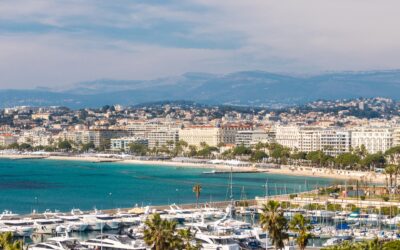
You’ve just hung up with a prospect. They asked for your rate to cover their two-day seminar in Nice. You hesitated, then gave a figure slightly below what you really wanted to charge — just to be sure you wouldn’t lose them. They said they’d think about it. They never called back.
Planning an event and looking for our rates? See our article how much an event photographer costs in Cannes.
Almost every event photographer has lived through this scenario. And it rests on a false belief: that lowering your prices increases your chances of signing. In reality, it’s often the opposite.
Your rate is your positioning
Before talking figures, you need to understand what your price communicates before the client has even opened your portfolio. A low rate doesn’t say “I’m accessible”. It says “I’m not sure of my worth”. And corporate clients — the ones with a real budget — steer clear of suppliers who don’t know how to sell themselves.
Major accounts, event agencies, marketing departments: they’re used to paying for quality. A photographer at €300 a day worries them as much as a caterer at €5 a head for a 200-guest gala. Your low price doesn’t reassure them — it makes them doubt.
The common thread of this article: setting your rates is first and foremost about deciding your place in the market. Every figure you put in a quote is a statement of positioning. It might as well be the right one.
What an event photography assignment really covers
When a client asks “how much for 4 hours of shooting?”, they picture 4 hours of work. What they don’t see — and what you need to learn to put a value on — is everything surrounding those 4 hours.
Before the event
- Emails / brief / scoping call (45 min to 2 hours depending on complexity)
- Venue recce if needed (travel + time)
- Preparing equipment, checking batteries, formatting cards
- Writing the quote and the contract
During the event
- Billable shooting time
- Travel on site, setting up
- Handling the unexpected (changing light, schedule slippage, last-minute requests)
After the event
- Importing and backing up (systematic dual backup)
- Selecting images (culling 300–800 raw photos)
- Retouching: exposure correction, white balance, colour grading
- Exporting to the required formats
- Delivery via online gallery or file transfer
- Handling any feedback
For a 4-hour on-site assignment, allow between 6 and 10 hours of total work. It’s this real time you need to be paid for — not just the hours spent standing behind the camera.
2026 market price ranges — by event type
These ranges are based on the French market, with a premium for the Côte d’Azur and Paris, where event budgets are structurally higher. They exclude travel and extended usage rights.
| Event type | Junior photographer (0–3 years) | Experienced photographer (3–7 years) | Senior photographer / agency |
|---|---|---|---|
| Corporate seminar (1 day) | €400 – €600 | €700 – €1,100 | €1,200 – €2,000 |
| Conference / keynote (half day) | €250 – €400 | €450 – €700 | €750 – €1,200 |
| Product launch | €500 – €800 | €900 – €1,400 | €1,500 – €3,000 |
| Gala / gala evening | €500 – €750 | €800 – €1,300 | €1,400 – €2,500 |
| Team building (full day) | €400 – €600 | €650 – €1,000 | €1,100 – €1,800 |
| Trade show (full day) | €450 – €650 | €700 – €1,100 | €1,200 – €2,200 |
Important note: these rates include delivery of a retouched gallery. They do not include extended commercial usage rights (see the dedicated section) or travel costs beyond 30 km.
How to calculate your minimum day rate
Before looking at what the market does, you need to know your floor. Below that figure, you’re working at a loss — even if you sign. The formula is simple:
Step 1: calculate your real annual costs
- Social security contributions: as a French micro-entrepreneur ~25.6% of turnover (2026 BNC rate, post-reform); as a limited company (SASU/EURL), allow 40–50% of net salary
- Equipment: depreciation of camera bodies, lenses, storage, accessories (~€150–400/month depending on your kit)
- Software: Lightroom, Capture One, client galleries (Pixieset, Pic-Time…) (~€80–150/month)
- Professional liability insurance: €80–300/year
- Travel, fuel, parking
- Ongoing training, professional subscriptions
- Accountant, bank charges
Step 2: estimate your real billable days
A year = 365 days. Take away weekends (104 days), holidays (25 days), bank holidays (11 days) and admin/prospecting/training days (~50 days). You’re left with around 175 potentially billable days. But in practice, event photographers bill between 80 and 130 days a year.
Step 3: the formula
Minimum day rate = (Annual costs + Target net salary) ÷ Number of billable days
A concrete example: costs of €15,000/year + net salary of €35,000 = €50,000 to generate. Over 100 billable days = €500 / day minimum. Below that, you won’t make ends meet. And this figure leaves no margin to invest, save or ride out a slow period.
Items often forgotten in a quote
Here are the lines that beginner photographers systematically leave out — and that make the difference between a profitable quote and a loss-making assignment.
Travel
Beyond 30 km from your base, charge for travel. Two options: actual costs (mileage allowance + tolls) or a flat fee. For events abroad or in hotels, accommodation and per diems should be built into the quote from the start.
Usage rights
This is the most undervalued item. Your photos have a usage value: an image used on a company’s website for 3 years has a different value from one posted once on LinkedIn. Usage rights are negotiated according to:
- The media: digital only, print, outdoor advertising, broadcast
- The duration: 1 year, 3 years, unlimited
- The territory: France, Europe, worldwide
- Exclusivity
For standard digital use (social media + website, 1 year, France), allow 15–25% of the shooting fee. For a full, unlimited assignment of rights, a minimum of 50–100% on top.
The rush surcharge
A request received less than 7 days before the event justifies a 20–30% surcharge. You’re blocking out your diary at the expense of other potential assignments. It’s normal to charge for that constraint.
Backup equipment
If you turn up with two camera bodies, a second flash and duplicate cards — it’s because reliability has a cost. You can build it into your overall rate rather than justifying it line by line.
Flat fee, hourly rate or price per photo: which to choose?
The full-day / half-day package
The most common model in corporate events. Easy to sell, easy to understand. The client knows exactly what they’re paying for. Ideal for seminars, galas and conferences. Drawback: if the event finishes 2 hours early, there’s no mechanism for a refund (and there shouldn’t be — you reserved the whole day).
The hourly rate
Suited to short jobs (1–2 hours for a cocktail reception or an awards ceremony). Be careful: over a long day, an hourly rate always works against the photographer — clients tend to push the hours. If you do work by the hour, specify in the contract what counts as an hour and cap the number of hours.
The price per delivered photo
Best avoided in event photography. This model encourages delivering more photos, not better ones. And it undervalues your selection and retouching time — which often accounts for 50% of the real work.
How to present your prices without justifying yourself
The way you announce your price changes the client’s perception as much as the figure itself.
- Don’t apologise. “It would be roughly… if that works for you…” signals insecurity. Say: “For this assignment, my rate is €X.”
- Break down the value, not the costs. The client doesn’t need to know what you pay in overheads. They want to know what they get: how many photos, how quickly, for which media, with which rights.
- Send a written quote within 24 hours. A fast, professional quote inspires confidence. A quote that arrives 5 days later after 3 reminders is worrying.
- Offer 2 or 3 options, not 1. Price anchoring works: if you offer Essential / Pro / Premium, the client compares your offers with each other — not your price with a competitor’s.
Raising your rates: how and when
If you’re fully booked for the next 6 months, you’re too cheap. It’s the simplest rule of freelance pricing. Also read: Freelance photographer vs photo agency.
The right times to raise your prices
- Every 1 January (annual review)
- After upgrading your equipment or skills
- After working for a notable client (a reference that justifies repositioning)
- When you’re regularly turning down assignments because you’re unavailable
How to announce it to existing clients
Let them know in advance, with a simple, direct email. No need to apologise. Example: “For all assignments from January 2026, my rates will increase by X%. I remain available for your projects and encourage you to book before this date to benefit from the current terms.”
Good clients understand. Clients who leave over €50 weren’t the right clients.
FAQ — the real questions photographers ask themselves
How do I know if I’m too expensive?
If more than 50% of your quotes are turned down on price, you may be poorly positioned — or targeting the wrong type of client. If fewer than 10% are turned down, you’re probably too cheap. A healthy conversion rate in B2B event photography is between 30% and 50%.
A competitor charges a third of my price. How should I respond?
Don’t get drawn into the comparison. Reply: “I understand there are price differences in this market. I’m not the cheapest, and that’s deliberate. What you’re paying for is X years of experience on similar events, a proven delivery process and the assurance that the photos will live up to your event.” Then let the client decide. Some will choose the cheapest — and end up calling a replacement photographer the day before the event.
The client is negotiating. What do I do?
Never reduce the price without reducing the service. If the client wants to pay less, offer less: fewer photos delivered, shorter shooting time, more restricted usage rights. It shows your price is structured — not made up — and it protects your perceived value.
Should I display my rates on my website?
In B2B event photography: no, or only indicative ranges. Every project is different. Displaying fixed rates deprives you of the flexibility you need to adapt your quote to the size of the client, the complexity of the event and the intended use of the images. A “Prices on request” page with a short contact form converts better than a fixed price list.
How do I handle clients who want photos “just for social media” on the cheap?
It’s often a lack of understanding of what you deliver. Clarify the value: professional photos for a company’s social media are marketing content that will be seen thousands of times. It’s not a low-cost service. You can offer a light package (half day, 10 retouched photos delivered) to stay accessible, without underselling all your services.
Conclusion: your price is your confidence made visible
Setting your rates in event photography isn’t an exact science — but it’s far from random. It starts with knowing your real cost price, continues with understanding what the market values, and ends with the ability to stand by your prices without caving at the first negotiation.
If you work on the Côte d’Azur, in Paris, or on high-stakes corporate events, the market is there to pay you at a level that lets you make a decent living from your craft — and invest to keep improving. The only question is whether you give yourself permission to ask for it.
Want to understand what agencies like Images d’Azur charge for high-end corporate events on the Côte d’Azur? Contact us for a tailored quote — it will also give you a market benchmark.